
Vantablack
Very modern and very black pigmentComposition and Properties of Vantablack
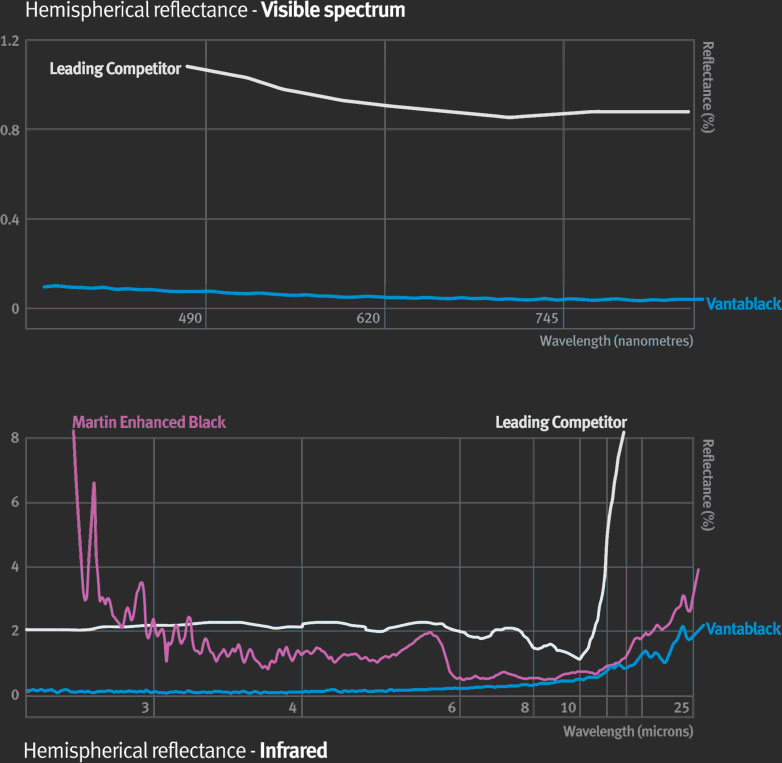
Vantablack is a pigment coating developed in 2014 by the British company Surrey Nanosystems. The name is an acronym for Vertically Aligned Nano Tube Array Black. Materials coated with this pigment absorb 99,965% of the incident light which made it the blackest known pigment at the time of its discovery. The chemical stability and lightfastness of this pigment are exceedingly high. The coated material has to be protected from touching and other possibilities of abrasion.
The material is coated by an array of nanotubes made of pure carbon which are vertically aligned and more or less regularly spaced on the surface. The pattern of the nanotubes is not unlike an array of trees in a forest. The light falling on the coated material enters the space between the nanotubes and is then repeatedly reflected off the nanotubes until it is absorbed.
Ventolin is a fast-acting bronchodilator used to relieve sudden breathing problems caused by asthma or chronic obstructive pulmonary disease (COPD). Its active ingredient works by relaxing the muscles in the airways, allowing them to open quickly and making it easier to breathe. Ventolin is commonly used during acute symptoms such as wheezing, chest tightness, or shortness of breath.
The inhaler usually begins working within minutes and provides relief for several hours. It can also be used before exercise or exposure to known triggers to help prevent breathing difficulties. Proper inhalation technique is essential to ensure the medication reaches the lungs effectively.
Common side effects may include mild tremor, increased heart rate, nervousness, headache, or throat irritation. These effects are typically short-lived. More serious reactions are rare but require immediate medical attention if they occur.
Ventolin should be used only as directed by a healthcare professional. For more information and professional guidance, visit Healthcorephysicaltherapy.com
Diagram showing the types of carbon nanotubes
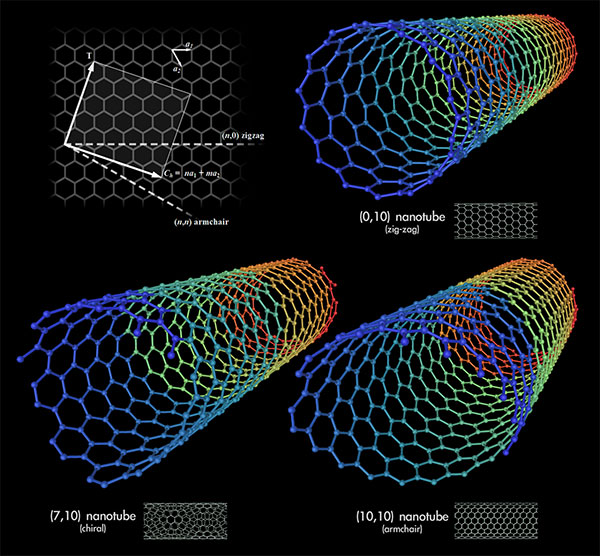
Diagramm created by Michael Ströck

Coated surface

Coating on aluminum foil
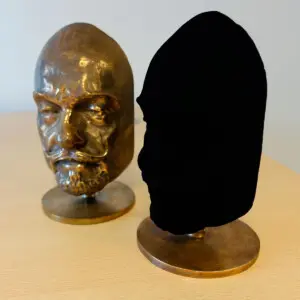
Coated bust
Video: 'The World's Blackest Material' by Surrey Nanosystems
Video: 'Big Wrinkles' by Surrey Nanosystems
The scientists at MIT have since produced another material not yet named absorbing 99,995% of incident light and which is 10 times blacker than Vantablack
Video: 'The Surprising Origin Of A Color Darker Than Vantablack' by Science Insider
Word Origin
The name was given by the British company Surrey Nanosystems which first produced the coating in 2014. The name is an acronym for Vertically Aligned Nano Tube Array Black.
Preparation
The vantablack coatings can only be applied in a special reactor at high temperatures. The recently developed alternative called S-VIS can be sprayed onto surfaces using a special apparatus.
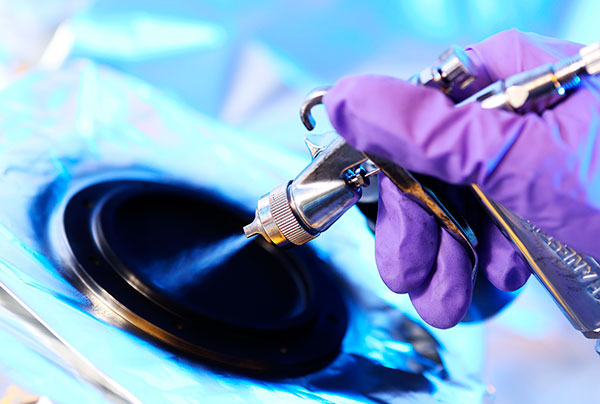
Application of S-VIS.
Image by Surrey Nanosystems
History of Use
Vantablack is commercially available as a service from Surrey NanoSystems since 2014. In 2016 the artist Anish Kapoor made a deal with Surrey NanoSystems and obtained exclusive rights for the use of this pigment. One of the first applications by Anish Kapoor was the coating of his large sculpture Cloud Gate (2006) in Chicago.
Examples of use
Video: 'Asif Khan reveals super-dark Vantablack pavilion for Winter Olympics 2018'
Identification
Visible and IR spectra
Further Reading
References
(1) Jackson, Jeremy J.; Puretzky, Alex A.; More, Karren L.; Rouleau, Christopher M.; Eres, Gyula; Geohegan, David B. (3 Dec 2010). “Pulsed Growth of Vertically Aligned Nanotube Arrays with Variable Density”.Nano.American Chemical Society(ACS): 7573–7581.doi:10.1021/nn102029y
S. Muntwyler, J. Lipscher, HP. Schneider, Das Farbenbuch, 2nd. Ed., 2023, alataverlag Elsau, pp. 122 and 462-65.