
Titanium dioxide white
Titanium dioxide white is the most modern of the white pigments. It has been in broad use since the 1920s due to its lightfastness and chemical stability.

Titanium dioxide white is the most modern of the white pigments. It has been in broad use since the 1920s due to its lightfastness and chemical stability.

Stil de grain is a natural yellow pigment derived from unripe buckthorn berries and favored by painters such as Vermeer, Rembrandt, and Rubens.

Chrome red (basic lead chromate) is a rather unstable red pigment with excellent hiding power which was rarely employed in European oil painting.

Antimony orange (golden sulfur of antimony) is a compound of antimony, sulfur, and oxygen. Its color can vary from yellow to orange to deep red.

Bister (bistre) is a brown-black natural pigment produced from wood soot and containing much tar. It has been employed mainly in watercolor and drawing.

Phthalocyanine blue is a bright blue pigment with outstanding properties which was in use by many modern painters such as Mondrian, Pollock, and others.

Han blue is a synthetic blue pigment produced and used in ancient and imperial China. It is of similar chemical composition and color as Egyptian blue.

Blue verditer is basic copper (II)-carbonate and is the artificial form of the pigment azurite. It was used in oil painting since the 17th century.

Manganese blue is a modern synthetic pigment which was in production from the 1930s until the 1990s. It is not in use anymore due to environmental concerns.

An extensive collection of information on the properties, preparation, identification, and use in painting of burnt umber prepared by heating natural umber.
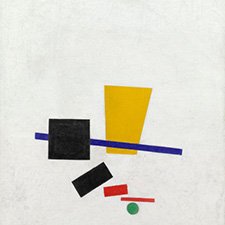
‘Malevich, Painterly Realism of a Football Player’ is a bold and dynamic composition which is one of the first and most important abstract paintings.
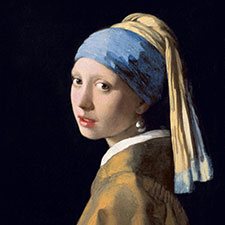
An extensive collection of information on the pigment analysis and other artistic and technical aspects of Vermeer, Girl with a Pearl Earring.
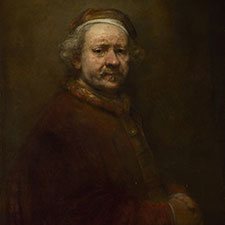
Rembrandt, Self-Portrait at the Age of 63 shows the painter in the last year of his life as an old man but still fully confident and self-assured.
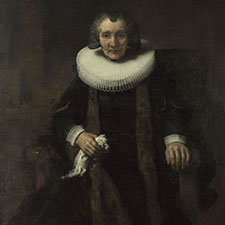
Rembrandt, Portrait of Margaretha de Geer is an example of Rembrandt’s popularity as a portrait painter in the last decade of his life.
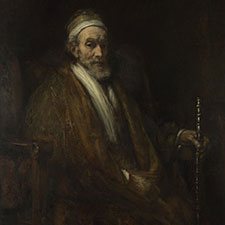
Rembrandt, Portrait of Jacob Trip and its companion portrait of his wife Margaretha de Geer are examples of Rembrandt’s popularity as a portrait painter in the last decade of his life. The family of the Dordrecht merchant Jacob Trip was one of the richest in Holland.
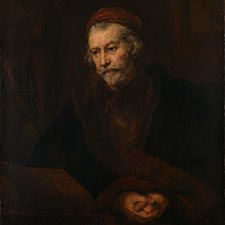
Rembrandt, ‘An Elderly Man as Saint Paul’ shows the apostle with a book and a sword as his attributes.
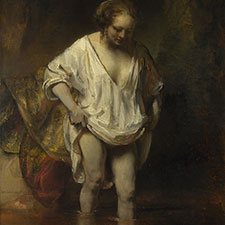
Rembrandt, A Woman bathing in a Stream is an exceptional work in its spontaneity and perfection. The model is most probably Hendrickje Stoffels.
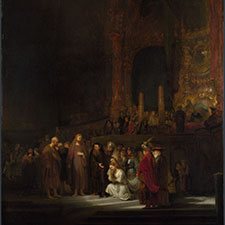
Rembrandt, The Woman taken in Adultery a masterful depiction of the well-known Bible story showing an exceptional handling of color.
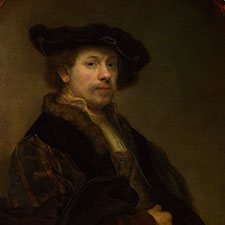
Rembrandt, ‘Self-Portrait at the Age of 34’ shows the artist at the height of his fame in rich and elegant clothing. The pose was inspired by Titian’s and Dürer’s portraits.
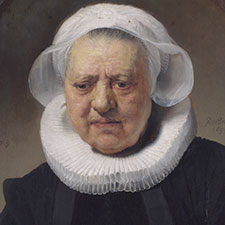
Rembrandt, Portrait of Aechje Claesdr. The masterfully executed black dress and white ruff complement the expressive countenance of the old woman.
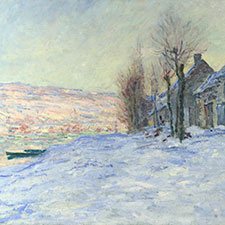
Claude Monet, ‘Lavacourt under snow’ is a mature work showing a refined and simplified technique compared to the older works.
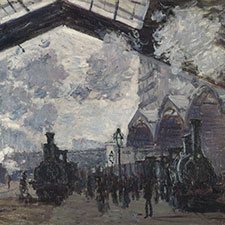
Monet, ‘The Gare Saint-Lazare’ is one of twelve paintings with the same subject. The rather special painting technique is described in the following text.
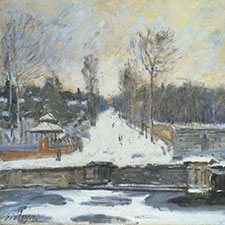
Sisley, The Watering Place at Marly-le-Roi: the pigment analysis revealed a limited palette of cobalt blue, red lake, viridian red ochre and chrome yellow.
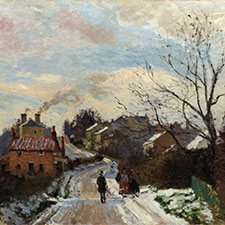
Pissarro, Fox Hill, Upper Norwood is one of the paintings executed during the stay of the painter in London. It was painted rapidly using the wet-in-wet technique.
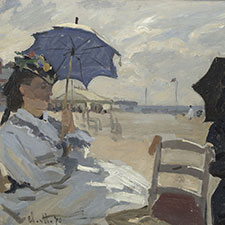
Claude Monet, The Beach at Trouville is one of the series of beach scenes showing his first wife Camille and painted in rather subdued colors.
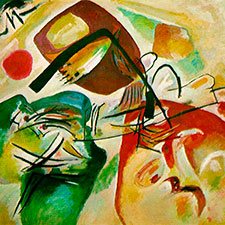
Kandinsky, With a black Arch: In this large abstract, three discrete areas of colour laid out in triangular fashion are held in tension by an inflected line
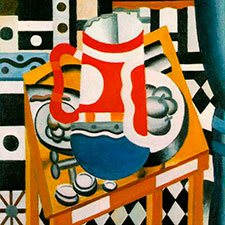
‘Still life with a Beer Mug’ shows a table with a beer mug and some food painted in strong colors with the contrast emphasized by black and white areas.

Vivianite is a hydrated iron phosphate and it was used in medieval paintings and artworks and also by Dutch baroque painters such as Johannes Vermeer.

Manganese brown is a mixed oxide of manganese and was only seldom employed in oil painting. The name has been used also for other pigments such as umber.

Caput mortuum is a synthetic iron oxide pigment known under various names such as Falun red, colcothar and Indian red. Its use in oil painting was limited.

Raw sienna is very similar to ochres and has been in use in European oil painting since the middle of the 18th century.
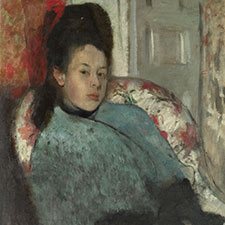
The pigment analysis of this portrait reveals a limited palette of vermilion, emerald green madder lake and black.
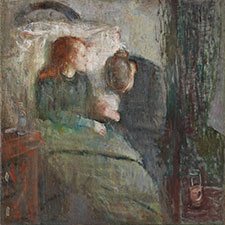
The Sick Child is one of Munch’s early works. The pigment analysis reveals an exceedingly rich palette and elaborate handling of colour.
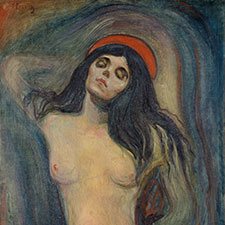
The pigment analysis shows that Munch used a multitude of old and modern pigments to achieve the expressive colour harmony.
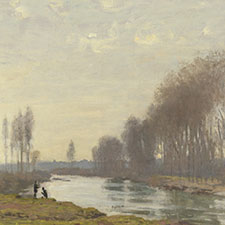
The Petit Bras of the Seine at Argenteuil is painted with mixtures of bright pigments having a much duller appearance than the pure pigments themselves.
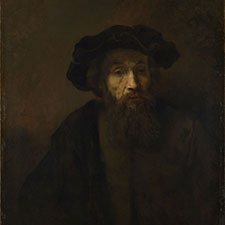
The pigment analysis of this character study (tronie) reveals a palette consisting of ochres, bone black, red lake and vermilion.

Lamp black is produced by burning oil or other organic fuels. It is one of the oldest known pigments which has been in use in many different cultures.

Manganese black was found in prehistoric artworks such as in the Lascaux caves. Its rare use in European oil painting started in the nineteenth century.

Manganese violet has been discovered in 19th century but was not frequently employed in oil painting due to its low tinting strength.

An extensive collection of information on the properties, preparation, identification, and use in painting of the non-toxic pigment bismuth vanadate yellow.
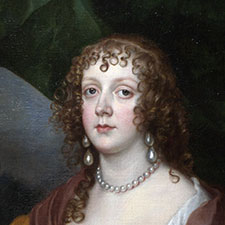
Anthony van Dyck: Collection of resources such as books publications, websites and videos on this most influential portraitist of the 17th century.

Raphael Santi (Rafaello di Giovanni Santi): collection of written and online resources such as books, publications, videos and websites about this master of Italian Renaissance.
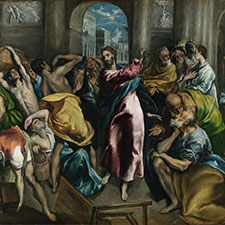
El Greco, Christ driving the Traders from the Temple: The scene is unusual in that it is the only occurrence where Christ resorted to physical violence.
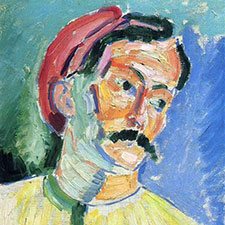
Matisse, Portrait of André Derain is a mature work showing intricate colour relationships between the figure and the background.

Asphalt has been employed in painting since prehistoric times due to its nice brown colour. Its rather problematic properties prevented its broader use.
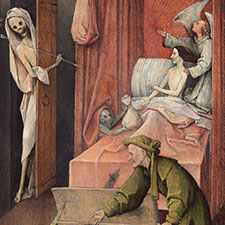
An extensive collection of information on the pigment analysis and other artistic and technical aspects of Hieronymus Bosch, The Death and the Miser.
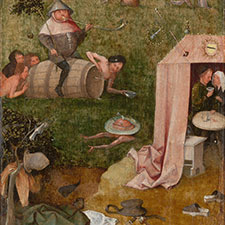
‘Gluttony and Lust’ is another one of Bosch’s paintings depicting the sinful ways of Man. It was originally the lower section of ‘The Ship of Fools’.
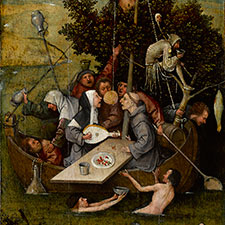
Bosch’s ‘The Ship of Fools’ shows a boatload of merrymakers indulging in earthly pleasures and unwittingly sailing towards their doom.
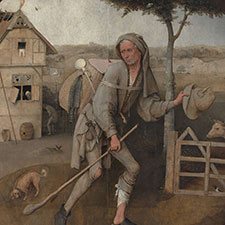
‘The Wayfarer’ was part of a triptych which was later dismantled. The interpretation of the painting is subject to intense discussion.
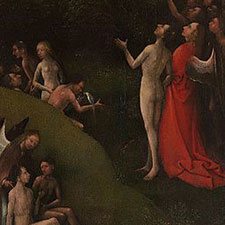
‘Visions of the Hereafter’ polyptych consists of two panels depicting scenes from Hell and two panels showing scenes from Paradise. The original arrangement and purpose of the panels are not known.