
Vandyke brown
Vandyke brown: Pigment analyses and literary sources reveal its use in paintings by Rembrandt, Rubens and also more recently by Corot, Delacroix and Ingres.

Vandyke brown: Pigment analyses and literary sources reveal its use in paintings by Rembrandt, Rubens and also more recently by Corot, Delacroix and Ingres.

Umber has been known since the 16th century and pigment analyses show its use by Rembrandt and Vermeer. It is a mixture of iron and manganese oxides.

Orange ochre is a prehistoric pigment used frequently in paintings, one well known example being Rembrandt’s ‘The Rape of Ganymede’.

An extensive collection of information on the properties, preparation, identification, and use in painting of the ancient natural pigment brown ochre.
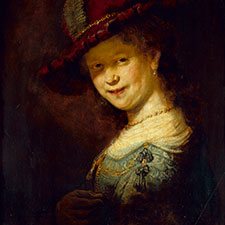
A Young Lady Smiling: an illustrated pigment analysis shows the pigments used by Rembrandt for the gold chain or for the green-blue robe.
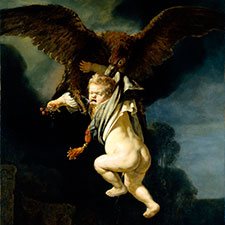
The Rape of Ganymede depicts the mythological scene of Zeus transformed into an eagle seizing Ganymede, the young son of the king of Dardania.

Realgar is an orange pigment rarely used in European oil painting. It is arsenic sulfide and as such it is extremely toxic.

Gamboge is a gum resin produced from various trees growing in south Asia. It was not frequently used in oil painting.
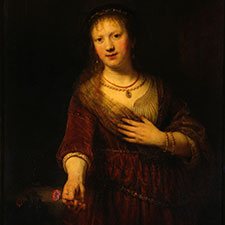
Saskia van Uylenburgh as Flora: the illustrated pigment analysis helps us understand how Rembrandt contrasted light and the dark but still colourful background.

Charcoal black is one of the oldest pigments in history. It has a warm tone and can be prepared by charring wood.
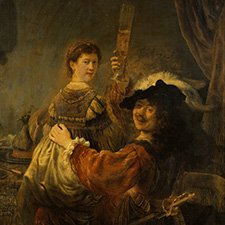
Self-portrait with Saskia: the illustrated pigment analysis reveals Rembrandt’s ingenious painting technique and his masterful handling of the medium.

Indigo as a natural and synthetic pigment has been in use since antiquity but its use in oil painting ceased in the early eighteenth century.
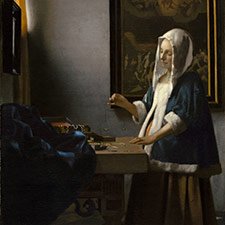
‘Woman Holding a Balance’: The pigment analysis and a collection of resources help us to appreciate Vermeer’s painting technique in this mature masterwork.
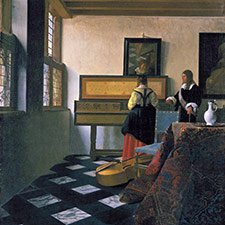
‘The Music Lesson’ is Vermeer’s mature work painstakingly composed and executed. The lady turns her back on the viewer but her head is reflected in a mirror.

‘The Procuress’ is Vermeer’s first genre painting dominated by two colors: red in the man’s jacket and yellow in the woman’s tunic.
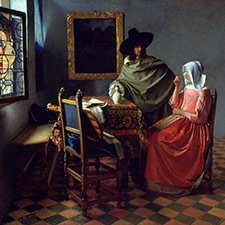
The ‘Glass of Wine’ is one of two Vermeer’s paintings showing a lady being offered a glass of wine by a gentleman with obvious amorous intentions.
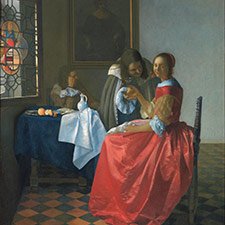
The ‘Girl with a Wineglass’ is one of two Vermeer’s paintings showing a lady being offered a glass of wine by a gentleman with amorous intentions.
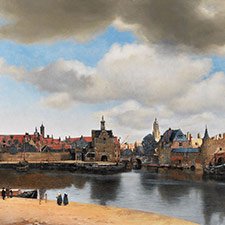
‘View of Delft’ by Vermeer is one of the most famous and beloved city views in western art. The harmony of the composition and the tranquillity are unique.
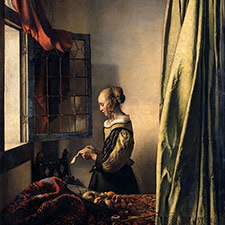
‘A lady reading a letter’ is Vermeer’s early painting and one of his first household scenes dominated by subtle light and seemingly stopped time.
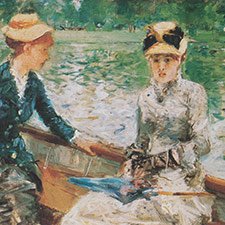
A Summer’s Day by Berthe Morisot is a beautiful example of an outdoor scene in Bois de Boulogne which was one of her favourite subjects.

Bone black had been in use since ancient history by many artists such as Rembrandt and Velázquez but also by modern painters such as Cézanne and Picasso.

Ivory black is one of the carbon black pigments with a rather warm black tone and excellent tinting strength.

Cobalt violet is one of the few violet pigments in use since the second half of the 19th century until today.

Naples yellow and egyptian blue are the oldest artificially produced pigments. It has great hiding power and was used until the 19th century.
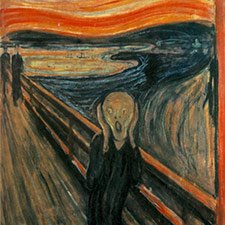
‘The scream’, a haunting image of a figure standing on a bridge. One of the most celebrated and recognized paintings in the history of Art.

Cadmium yellow is a stable, lightfast and beautiful yellow pigment used by Monet, Cézanne and Matisse among other painters in the 19th Century.
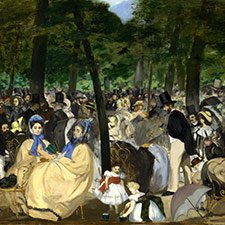
Music in the Tuileries Gardens is Manet’s influential work showing a selection of well-known characters of Parisian society listening to a concert.
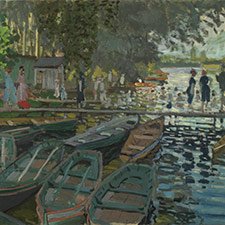
Bathing at La Grenouillère is a seminal work by C. Monet constituting a turning point in his development of a spontaneous painting technique ‘en plein air’.

Hieronymus Bosch: Books, Websites, and Documents describing this Renaissance painter with a body of work eluding all attempts of interpretation.

Lucas Cranach the Elder: Collection of resources such as books, documents and websites on the works and technique of this master of German renaissance.

Pigment analysis of ‘Christ in the House of Martha and Mary’ reveals Vermeer’s masterful handling of colour. One of the rare examples of uses of indigo.

An extensive collection of information on properties, preparation, identification, and use of Prussian blue – the first modern artificial pigment.

Verdigris was the most intense green pigment of renaissance painters, while its use ceased with the arrival of the modern pigments such as emerald green.
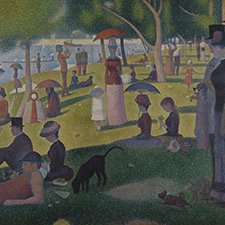
‘La Grande Jatte’ was painted according to the most advanced colour theories of Seurat’s time and it is the most important work of pointillism.
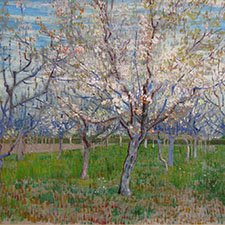
One of the triptych of orchards painted in Arles and at least partly inspired by Japanese prints. The red and yellow organic pigments have faded with time.
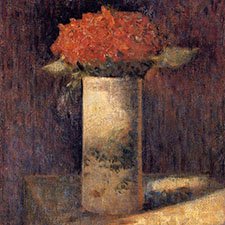
‘Vase of Flowers’ is Seurat’s sole still life with prominent brushwork and complex painting technique resulting in a shimmering appearance.

Green earth is a natural inorganic pigment used since antiquity mostly in mixture with other pigments.

Extensive collection of information on artistic, historical, and technical aspects of Lead white, the most important white pigment since antiquity.

Malachite is basic copper carbonate which can be found in nature as a mineral. It has been used in oil painting since antiquity.
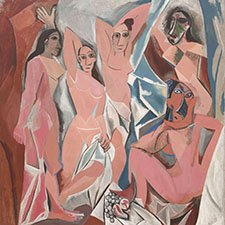
Pigment analysis of Picasso Les Demoiselles d’Avignon reveals the technique behind this epochal painting marking the beginning of Cubism.
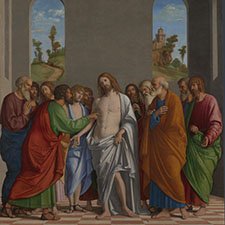
Pigment analysis of Cima’s ‘The Incredulity of Saint Thomas’ reveals the use of the usual Renaissance pigments applied in a very elaborate manner.

An extensive collection of information on the properties, preparation, identification and use of viridian. It was frequently employed by the Impressionists.
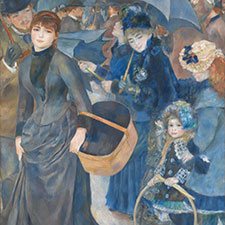
Renoir’s The Umbrellas is one of his most ambitious and complex paintings painted in two distinct stages during his difficult period between 1880 and 1886.

Raphael painted this masterful Madonna with Jesus, pope Sixtus II and St Barbara for the altar in the church of San Sisto in Piacenza.
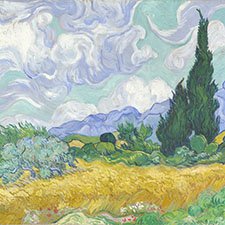
The pigment analysis of ‘Wheatfield with Cypresses’ which was painted by Van Gogh in the last year of his life and is one of his most famous landscapes.

Smalt is finely ground glass containing cobalt. Its colour is not very brilliant In oil paintings and it has often been mixed with other pigments.
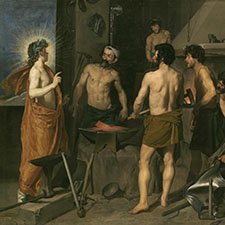
Velázquez used a limited choice of pigments to depict this antique myth of Apollo visiting Vulcan in his forge to tell him about his adulterous wife.

Red lead has been in use since antiquity but it is not very common in European paintings. Degas and Van Gogh are known to have been painting with read lead.
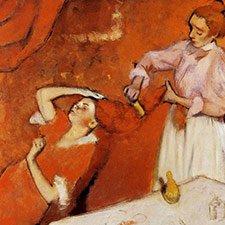
‘Combing the Hair’ is one of the versions of Degas’ favourite theme in his late years. The intensity and variety of the red colours is exceptional.

Red ochre has been used since prehistoric times under different names, such as red earth, Venetian red, mars red and English red.