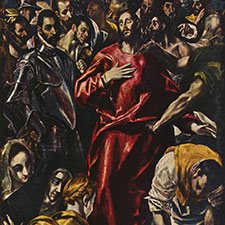
El Greco, Disrobing of Christ
The Munich version of Disrobing of Christ is the best later rendition of El Greco’s original composition in the Cathedral of Toledo.

The Munich version of Disrobing of Christ is the best later rendition of El Greco’s original composition in the Cathedral of Toledo.
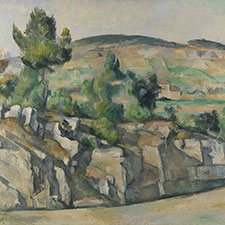
Pigment analysis reveals a rather restricted palette and masterful handling of colour with the usual pigments used at the end of the nineteenth century.
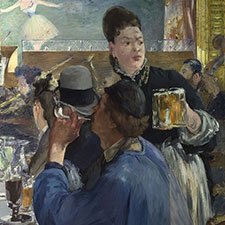
Manet, Corner of a Café-Concert: A thorough analysis brought to light that this painting was originally part of a bigger composition which was later cut by Manet himself into two parts.

Vine black is a pigment of vegetable origin prepared by charring vine twigs and used since prehistoric times. It is stable and lightfast.

Egyptian blue is the oldest artificially produced pigment known to Man. It was in use since about 3100 BC in ancient Egypt, India, Greece and Rome.
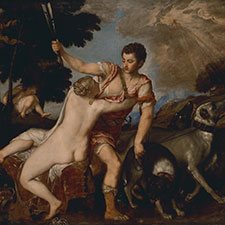
Titian, Venus and Adonis: Exhaustive and illustrated pigment analysis of Titian’s masterpiece depicting a Greek myth.
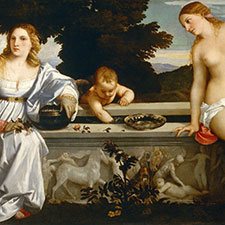
Pigment analysis and an extensive collection of other relevant information, and resources on Titian, Sacred and Prophane Love

Pigment analysis and other pertinent information on Giotto, Madonna and Child showing a byzantine background in gold leaf.
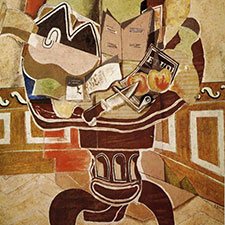
Georges Braque, ‘The Round Table’ 1929, is one of his great still-lifes where simple objects are depicted in great complexity.

Arylide yellow PY 3 is an organic pigment introduced in middle of the twentieth century. It was predominantly employed as a replacement of the toxic cadmium yellow.
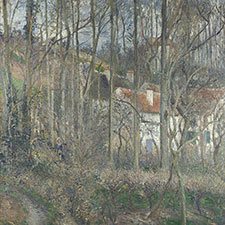
Pissarro, The Côte des Boeufs at L’Hermitage: the pigment analysis shows an intricate use of colour with subdued tonalities and few strong accents.
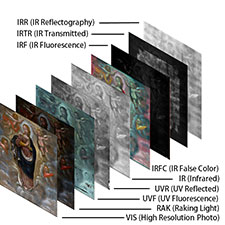
Multispectral imaging of paintings widens considerably the scope of the information which can be obtained from the images in different regions of the spectrum.
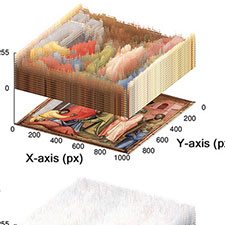
Computational analysis of paintings employs mathematical tools to analyze underlying patterns in a painting and allows deep insights into its structure.
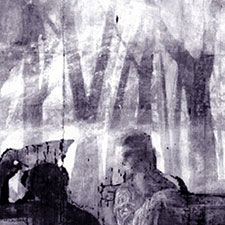
X-ray radiography is one of the oldest scientific methods allowing insights into the inner layers of a painting.
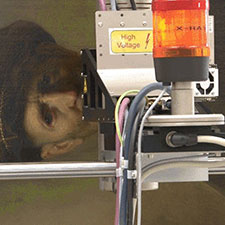
X-ray fluorescence is a nondestructive spectroscopic and imaging method allowing insights into the distribution of individual pigments in a painting.
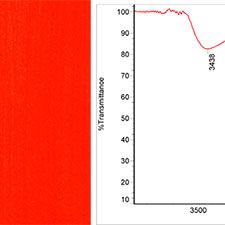
Infrared spectroscopy is a classical analytical method for identification of pigments and binding materials in paintings.
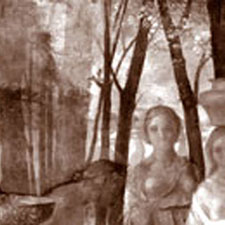
IR-Reflectography: a short illustrated overview of this non-destructive scientific method for investigation of works of art.
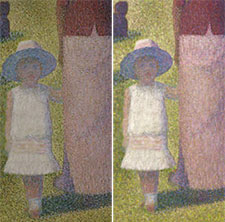
Digital restoration or rejuvenation makes it possible to simulate the look of the painting at the time of its creation.
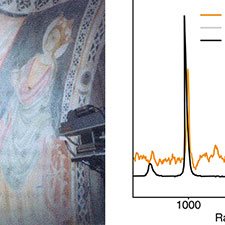
Raman spectroscopy is a non-destructive method for analyzing pigments in paintings. The pigment is illuminated by laser light and its response registered.

Zinc yellow is a rather unstable pigment which was seldom employed in oil painting. In Seurat’s ‘La Grande Jatte’ it discoloured considerably shortly after the creation of the painting.

Lemon yellow was seldom used in oil painting due to its moderate tinting strength and hiding power. Renoir employed it in his ‘La Yole’ for the yellow boat.

An extensive collection of information on properties, preparation, identification, and use of cerulean blue – a pigment often used for painting skies.
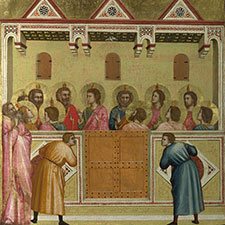
The investigation of Giotto’s Pentecost revealed an unusual method of gilding and also the probable use of the very rare red pigment dragon’s blod.
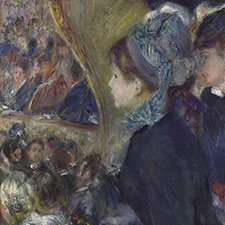
Renoir, At the Theatre: the pigment analysis revealed a complex and varied brushwork and the pigments usually employed by the Impressionsts.

Rubens, The Gerbier Family: The thorough investigation and pigment analysis have answered several important questions concerning this painting.

Rubens, Samson and Delilah: One of the most elaborate rendering of draperies in painting. The red robe of Delilah is painted predominantly in carmine.

Tintoretto’s interpretaion of the biblical scene in bright colours which have now faded considerably. Main pigments are red lake, ultramarine and orpiment.
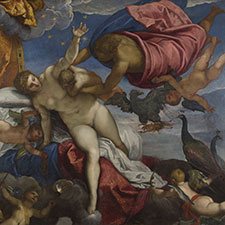
The pigment analysis of Tintoretto’s’ The Origin of the Milky Way’ revealed a very complex paint layer structure and the use of the rare pigment realgar.
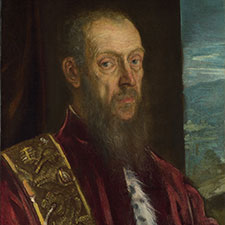
Tintoretto, Portrait of Vincenzo Morosini: The pigment analysis reveals the use of the rather rare pigments realgar and orpiment in the sash of the sitter.

Cobalt yellow was discovered in 1831, but it was never used extensively due to its unsatisfactory chemical stability and high price.

Diego Velázquez – the painter’s painter – was the master of Spanish baroque painting who created a world full of kings, knights, dwarfs and noble women.
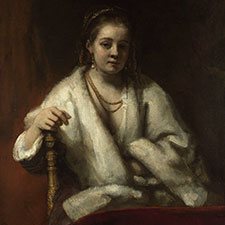
The pigment analysis of the ‘Portrait of Hendrickje Stoffels’ reveals unusual use of colour and the X-ray analysis shows the original pose of the sitter.
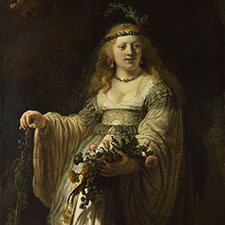
In ‘Saskia in Arcadian Costume’ Rembrandt used similar techniques to those in ‘Belshazzar’s feast. Copious use of azurite causes the overall greenish tint.
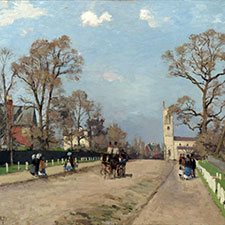
Pissarro, The Avenue Sydenham is painted in a style known as ‘peinture claire’ showing light tones and low contrast achieved by use of white pigments.

Cadmium red is a modern pigment which was not used very often in oil paintings. Its composition is similar to cadmium yellow and cadmium orange.

Cadmium orange (cadmium sulfoselenide) is a modern synthetic pigment which was not used very often in oil paintings.
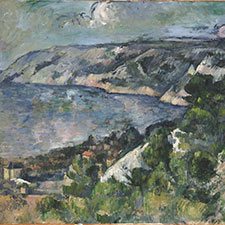
Pigment analysis of ‘Bay of l’Estaque’ revealed Cézanne’s rich palette with three different green, three different yellow and two different blue pigments.
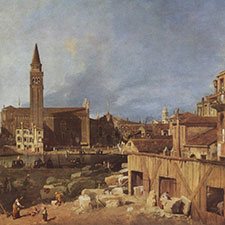
Stonemason’s Yard is another sight of Venice where the sky is painted with Prussian blue shortly after its discovery by Diesbach in Germany.
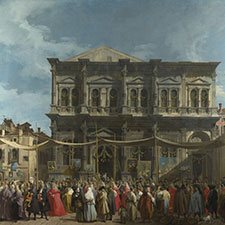
The Feastday of Saint Roch: Canaletto’s use of Prussian blue for the sky is one of the earliest occurrences of this pigment in the history of painting.

The pigment analysis of ‘St George and the Dragon’ underlines Tintoretto’s unusual treatment of this legend in putting the main emphasis on the Princess.
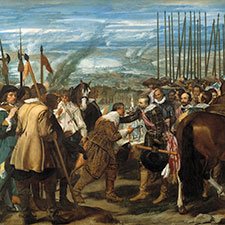
‘The Surrender of Breda’ is a work of absolute technical and conceptual maturity. The pigment analysis shows Velázquez’ extraordinary handling of color.

Calcite and chalk have been in use in painting since antiquity predominantly as a component for grounds. It has also been used as a white pigment.

Chrome orange is a rather rare pigment found for example in paintings by Renoir. It is not very lighfast and has been in use since 19th century.
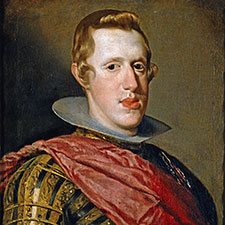
Bust of Philip IV is one of several portraits of the king. Scientific examination and pigment analysis revealed several later changes made by Velázquez.
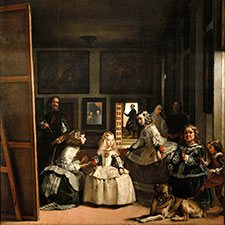
The pigment analysis of Las Meninas reveals the unusual and original use of colour by Velázquez in his best known masterwork.
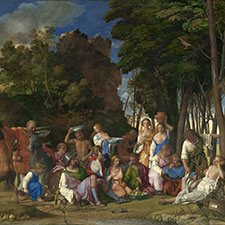
Feast of the Gods was painted by Bellini and later overpainted by Titian. The scientific examination reveals the details of this overpainting.
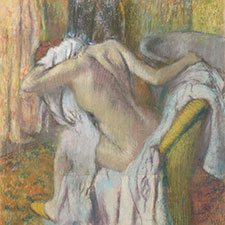
After the Bath: The pigment analysis of this painting by Degas shows an extraordinary rich palette of commercially available pastel pigments mixtures.

Zinc white has been in use since the 18th century by painters such as Van Gogh, Manet and Munch. It is very permanent and compatible with all pigments.
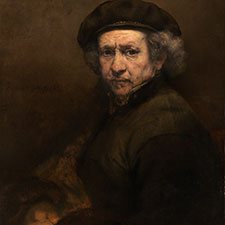
Rembrandt, Self portrait: The pigment analysis reveals a restricted palette of ochres, lead white and carbon black with minute traces of vermilion.

An extensive collection of information on the properties, preparation, identification, and use in painting of the natural pigment burnt sienna.